
In 2021 and Beyond
The COVID-19 pandemic that consumed the global community in 2020 has caused a crisis never imagined before. The devastating loss of human life, the extraordinary strain on healthcare systems, the crushing impact on economic & social structures, and the lingering fear of the unknown are still being felt months into the new year.
The business world was completely turned upside down as well and some of the hardest hit were small and medium business owners and their peers in the NGO and nonprofit world. The outbreak forced many decision makers to redefine their definition of “workplace environment” and take a closer look at how to adapt to an ever-changing work dynamic.
From social distancing, mask-mandates, lockdowns, and self-quarantines, both employers and employees had to adjust their traditional work norms on the fly. The business community had to pivot quickly to adapt to a new daily reality and all of a sudden found itself relying even more on IT infrastructure, cloud-based platforms, and new software systems to keep critical operations and projects running smoothly and effectively.
We witnessed that many of our clients and the partner organizations already had some preparations in place for the type of upheaval that we experienced last March, whether they (or we) knew it or not.
A significant part of this preparation is that the we’ve collectively been shifting to the cloud for several years now. The fact that many organizations had already moved, or were in the process of moving to cloud-based software systems meant that they already had a lot of structure in place to make the shift to complete remote work much more manageable.
Similarly, many of our clients had already done the hard work to design and implement robust Business Continuity and Disaster Recovery plans. While we couldn’t have imagined that a global pandemic would be one of the situations under which these plans were deployed, they were integral in helping our partner organizations pivot quickly to the new work day realities.
As the coronavirus quickly took hold of the world, many government and business offices, and most of the world’s smaller employers, had no choice but to shut down to help stop the spread of the virus. Executives looked to their IT department for the rapid transition to a work-from-home business model. Operations shifted focus from strategic and innovative to responsive and preventative.
While we couldn’t have imagined that a global pandemic would be one of the situations under which these plans were deployed, they were integral in helping our partner organizations pivot quickly to the new work day realities.
Over the past year, IT leaders spent more time and resources on cost control/expense management, improving IT operations/systems performance, redesigning business processes, developing and refining business strategy, and security management in the newly distributed operating environment. Prior to the pandemic, many IT departments were spending time on aligning initiatives with business goals, implementing new systems & architecture, and driving business innovation.
This strategic and operational shift in focus means that 2021 will likely need to be a year of adjustment and re-evaluation as we all take a step back to understand how the global pandemic has and will continue to impact our daily operations and larger strategic goals.
Moving forward in 2021
A year ago, this month, IT teams across the country scrambled to get businesses set up for telecommuting and then made facilitating remote work their top priority. At the drop of a hat, many business owners had to shut down their physical workspaces and adapt to a remote work model. Little did we know back then that Zoom would become the primary service to hold virtual meetings and remote work was to be the “new norm” in office operations.
Today’s work environment is still challenging for companies and employees; we are all constantly adapting to stay effective and operational. It is no longer enough to have a laptop and an internet connection. Employees need their desktops and phones to follow them. They need voice, chat, and video to seamlessly collaborate, especially when face-to-face interaction isn’t an option. In this new context, IT managers are tasked with enabling all of this technical capacity while keeping data secure, managing costs, and ensuring the business can run effectively.
While many companies, both large and small, are likely to continue with telework policies, many others plan to take a gradual, cautious approach to bringing employees back to their workplaces as governments begin to lift restrictions tied to COVID-19. Many of these companies are implementing return-to-work guidelines stricter than local government requirements.
One broadly expected change, at least in the near term, is employers won’t expect all workers to come to the office five days a week, if at all, and companies will have to shrink or reconfigure office spaces accordingly. One reason behind this likely trend is the reluctance employees might have in returning to an office environment. This reluctance may be due to underlying fears of exposure to the coronavirus, that they perform at a higher level from home, or possibly that working remotely allows them to manage their lifestyle more efficiently. In addition, the added space requirements necessary in a world in which Covid-19 is still a factor may also push employers to prefer a staggered work schedule as well.
Over the course of the pandemic, organizations have been exploring the advantages and disadvantages of a hybrid workplace model. The hybrid workplace is a business model combining remote work with office work. It provides a workplace culture that supports both in-person and remote workers. Hybrid work includes increased freedom and autonomy around when to work, and where. It generally allows employees the opportunity to fit work around their lives, rather than structuring work around fixed hours logged into an office.
However, the hybrid remote/office model presents a whole new range of IT challenges. One pressing IT concern with the hybrid model is the heightened cyber risks surrounding user interaction. Cyber-attacks, human error and data loss are more likely when working and communicating from changing locations. Companies need to have a detailed policy in place emphasizing the importance of password management, cybersecurity training, software updates, and multi-factor authentication. According to recent report by the data security firm Netwrix, accidental improper sharing of data by employees is also an issue that has been on the rise during the coronavirus lockdown and one that has IT directors on edge.
With the distribution of the COVID-19 vaccine well under way, business owners are hopeful that a return to normal (and the office) is not too far away. However, with the new vaccines also comes new concerns, doubts, and plenty of questions. This is uncharted territory for all of us, but employers are trying to navigate the complexities surrounding their vaccinated employees vs. unvaccinated employees. There are many potential legal, ethical, and practical implications that need to be considered before a comprehensive return-to-work policy is put into place. The CDC encourages people to get the vaccine when it is made available to them and studies strongly suggest that the benefits far outweigh any side effect.
What the office space might look like returning to work
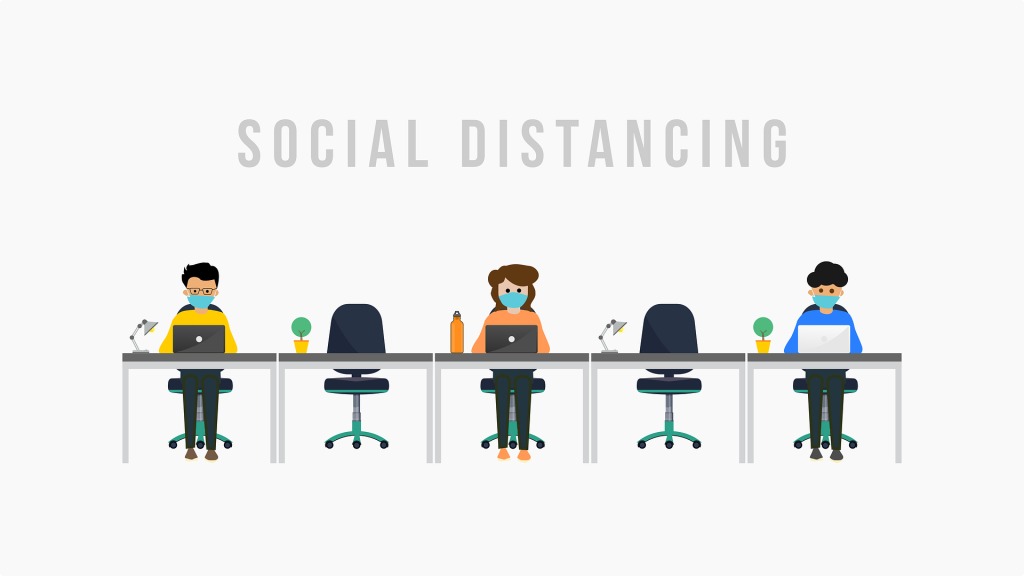
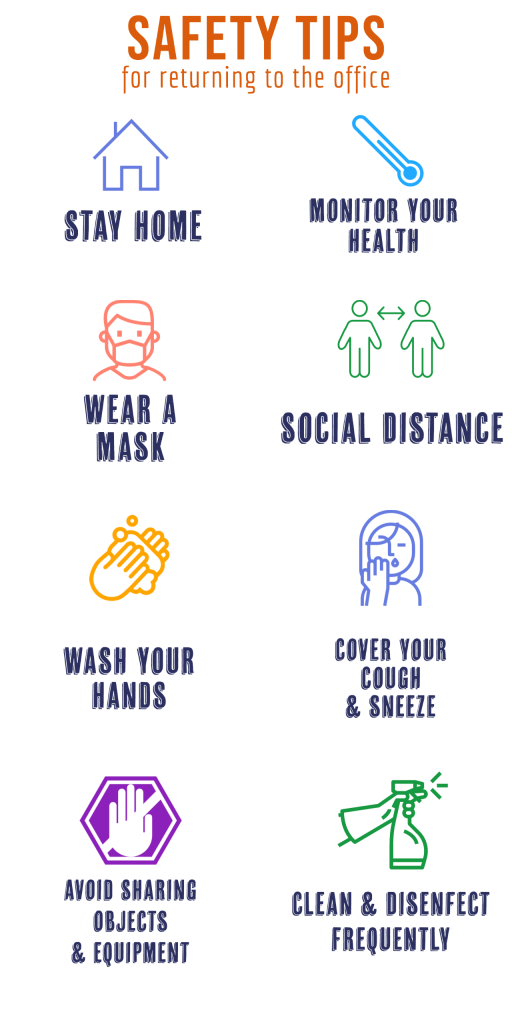
According to the Occupational Safety and Health Administration (OSHA), employee safety will be the highest priority when businesses return to the office space. Employers must not only implement back-to-work safety protocols, but make sure they communicate those efforts to returning employees and ensure that those policies are adhered to. This includes maximizing social distancing via greater spacing through seating plans, workstation arrangements, and manufacturing line configurations. Among the other recommendations that might have the most visible impact on office environments:
- Organizations should consider installing visual social distancing and sanitation cues like floor markings and signage reminders,
- Consider staggering the timing of employee shifts and breaks,
- Provide additional hand sanitizing stations,
- Mandate the use of masks in the workplace, and
- Designate team members to ensure that protocols are being followed and that employees have what they need in terms of knowledge and equipment to maintain personal/workplace safety and hygiene.
So, with these new and maybe many more protocols in place, your old office may look a lot different when you do return. Social distancing will require removing and spacing out desks, tables, and workstations. The traditional cubicle layout will be more widely spaced, with new protective guards and an abundance of sanitized protective gear. More collaborative workspaces, with fully loaded video conferencing options will be made available to link up in-person and work-from-home employees. There will likely be an increased use of outdoor space, at least in areas where climates and space allow.
Employers could lean into a more distributed approach to offices—instead of one big central location, there could be multiple smaller workplaces spread throughout metro areas. Improvements to air quality and ventilation will be a noticeable, necessary (and welcome) upgrade to the office space. At least in the near term, face coverings will be required in many work places, as probably so will temperature scans before entering the building. Office policies will most likely be updated frequently to accommodate and adhere to evolving local health guidelines. Also, a compliance monitor should be assigned to note infractions and office capacity levels. To ensure a safe and healthy work environment, employers will also need to have the space thoroughly cleaned and sanitized on a regular basis. Expect numerous hand sanitizing stations located around the office space for extra safety precautions. In addition, expect to follow one-way corridors or marked walkways in order to move about the office space.
Kevin Martin is a Sales Executive with ITeck Solutions LLC,an IT and business consulting firm based in the DC Metro area. ITeck has been operating in the region for more than 16 years and has a wealth of experience in providing strategic business and technology expertise to organizations of all shapes and sizes. We pride ourselves on equipping our partner organizations with the tools and knowledge to meet the challenges of today’s rapidly evolving business environment. This includes working collaboratively to design and implement comprehensive business continuity and disaster recovery plans, facilitating organizational shifts to the cloud, and planning for and securing hybrid work environments. If you’re interested in working with ITeck, please reach out to schedule your free consultation today.
